


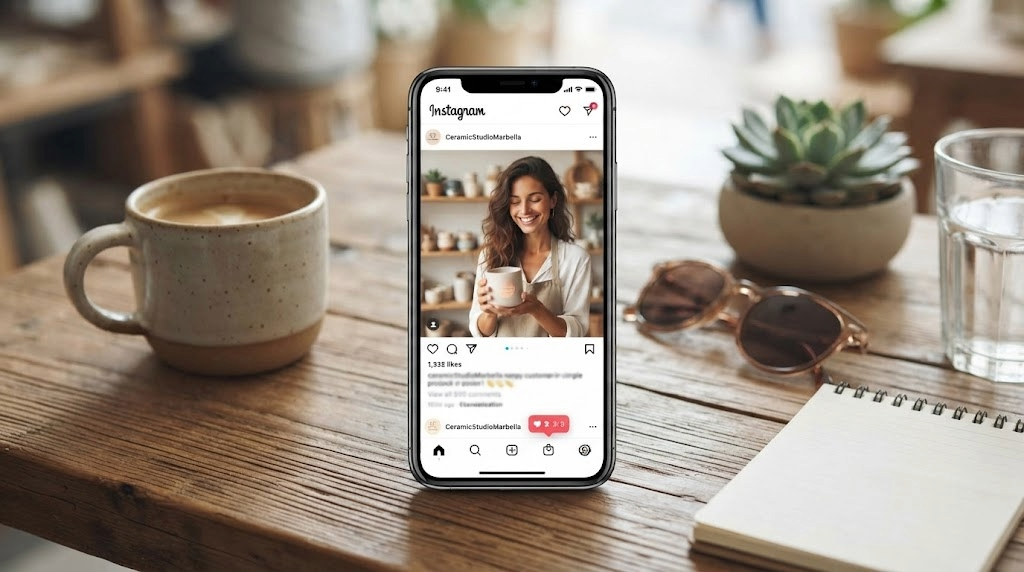
What is User-Generated Content and Why Is It Powerful?
We’re living in a cynical and marketing-savvy age, where trust must be earned and brands’ marketing claims are doubted. If you’re doing business on the Costa del Sol, levels of trust are lower still, as everyone assumes that you’re a cowboy and don’t know what you’re doing!
This lack of trust means that people are looking for genuine and authentic marketing, and don’t believe most of the slick corporate advertising and marketing that has been the gold standard for so many years!
Imagine you’re browsing online to find a new restaurant in Marbella and think what you’d respond to most. Would you stop on the slick, highly polished social media post where a professional model pretends to love the pasta in the local Italian restaurant? Or is it a slightly grainy, authentic snapshot posted by a real person with their meal and an unedited caption like, “Just found our new favourite place for pasta!”?
If you are like 99% of modern consumers, you will have scrolled straight past the corporate ad and paused on the real person’s post, because you’re looking for a genuine recommendation, and avoiding being sold to.
We have become desensitised to traditional corporate advertising and we don’t believe what they say, because we know that a brand will always say wonderful things about itself. But when an ordinary person takes the time out of their day to photograph, review, and share their experience with a brand voluntarily, that carries immense weight.
In marketing, this phenomenon is called User-Generated Content (UGC). And if you are running an SME on the Costa del Sol, mastering UGC could be your ticket to building instant brand authority and driving conversions.
What Exactly Is UGC?
Before we talk about how to do it, let’s define UGC. To put it simply, User-Generated Content (UGC) is any form of content (images, videos, text reviews, testimonials, audio clips, or live streams) that has been created and published by unpaid contributors, fans, or customers, rather than the brand itself.
UGC is not paid influencer marketing campaigns, although influencer marketing can carry some of the weight of UGC. Nor is it anything that a brand creates.
UGC is real people, using your products, experiencing your services, and sharing their genuine thoughts with their own personal networks.
Why User-Generated Content is so Powerful
Why has UGC become the gold standard of modern marketing strategies? The answer boils down to three fundamental pillars: trust, social proof, and cost-effective scale.
1. The Ultimate Form of Social Proof
Social proof is a psychological phenomenon where people assume the actions of others in an attempt to figure out how they should behave in a given situation. In business, if potential customers see that other people are happily buying, using, and enjoying your product or service, their perceived risk of doing business with you drops dramatically.
When a tourist visiting the Costa del Sol looks for a reputable car rental agency or a tour guide, they don’t want to read your sales pitch. They want to see photos of other families smiling in your cars or experiencing your tours. UGC proves that your business delivers on its promises in the real world.
2. Authenticity Trumps Production Value Every Time
For decades, businesses believed that marketing needed to look expensive to be effective. We invested heavily in professional lighting, scriptwriters, models, and editing suites.
Ironically, the internet has completely inverted this model. Today, consumers actively crave imperfection. A video shot on a smartphone with natural wind noise and authentic lighting feels trustworthy. It feels like advice from a friend. Because UGC lacks the sterile, corporate sheen of traditional advertising, it disarms the consumer and fosters a genuine emotional connection.
3. Hyper-Local Relevance and Community Connection
In tight-knit regional markets like the Costa del Sol, divided by nationality and language, community is everything. Especially when you’re marketing to a new arrival or tourist, who might not speak the language and are searching for recommendations. When local residents or regular visitors post about a local business, or share on the powerful hyper-local Facebook groups, their followers and fellow group members are often people living in the exact same neighbourhoods or operating in the same social circles.
This creates a localized ripple effect. A single tagged photo from a satisfied client can instantly put your business in front of dozens of hyper-targeted local prospects who trust the person who posted it. Have that shared into a local Facebook group and that’s amplified even further to information-hungry members, looking for genuine experiences and recommendations.
How SMEs Can Encourage and Harness UGC
You might be thinking: “This sounds fantastic, but my customers aren’t just naturally posting about my accounting firm or my air conditioning repair service.”
While it’s true that trendy restaurants, amazing hotels, and clothing brands find it easy to generate UGC organically, service-based businesses, B2B companies, and technical trades can successfully cultivate UGC with a little strategy and planning and we’d definitely recommend making the effort.
Here is how you can harness the power of this marketing technique.
1. Design “Shareable” Moments (Or Deliver Remarkable Service)
If you operate a physical venue, look at your space through the lens of experience. Is there an area that naturally inspires photos? Do you have unique branding, beautiful lighting, or an exceptional unboxing experience? If you are a service provider, design your client onboarding and final delivery so memorably that the client wants to brag about it online. Send a personalized thank-you note, a custom welcome gift, or an unexpected bonus that moves them to post about working with you.
2. Don’t be afraid to ask or incentivize
Many SMEs don’t receive reviews or social media posts about their product or service, simply because they are afraid to ask. In follow up emails or communications after people have used you, visited your premises or bought your product, check they are happy with their product/service and suggest that if they are, that it would really help you if they were to leave a review, or post on social media about the experience, tagging your social channels. You can also make it even sweeter by offering a discount or extra on their next purchase with you if they do it.
Include direct links to your Google Business Profile or social channels, making it a frictionless one-click process to leave a review or photo.
You’ll find that most people are happy to help, but they don’t think of it if they aren’t asked.
3. Make It Incredibly Easy to Leave Feedback and Tags
Never assume your customers know how or where to tag you, or even think about it at all!
Help them by including your social media handles clearly on your receipts, invoices, packaging, office reception desk and in any emails.
Train your front-line staff to warmly invite sharing: “We loved having you today! if you share any snaps of your new look online, make sure to tag us so we can see!
4. Feature and Reward Your Community
When customers take the time to create content about your business, amplify it immediately. Re-share their Instagram stories, feature their reviews on your website testimonials page, or spotlight a “Client of the Month” in your email newsletter. People love feeling seen and appreciated. By celebrating your customers publicly, you validate their effort and encourage others in your community to do the exact same thing.
Say thanks on their posts too, and express how much it means to you. They will appreciate it, and it will also encourage others to follow suit.
The Legal and Ethical Checklist for UGC
Before you start reposting every piece of content your customers throw your way, keep a few basic ground rules in mind:
- Always Ask Permission: Just because someone tags you in a public post doesn’t mean you automatically own the commercial rights to plaster it across your website banner. A quick DM saying, “We love this photo! Would you mind if we shared it on our feed/website with credit to you?” is polite, professional, and legally safer.
- Always Give Credit: Never pass off someone else’s hard work as your own original content. Always tag the creator and thank them by name.
- Respect Privacy: If a customer posts a photo featuring sensitive personal information or unintended backgrounds, exercise discretion before amplifying it.
Stop Talking About Yourself and Activate your Customers Instead
Marketing used to be a one-way megaphone: brands shouted messages at consumers through TV screens, billboards, and print magazines. Today, marketing is a multi-directional conversation.
You still need your conventional corporate marketing materials to explain who you are and what you do via your website, social media, advertising or print materials. These are the backbone which proves that you’re real and gives something that potential clients can check if they hear about you through their network.
However, smart companies on the Costa del Sol are combining these traditional techniques with UCG and letting their community do the talking for them. By embracing User-Generated Content, you stop trying to convince people that you are great, and you start letting your happy, loyal customers prove it for you.
Stop trying to produce every piece of content yourself. Sometimes, the most powerful marketing asset your business can own is already sitting in your customer’s photo gallery, just waiting to be shared.
Want to learn more?
If you’re ready to improve your online and offline marketing, book a brainstorming session or a marketing training workshop with Georgina, or contact us to discuss how we can support you with social media management and PR.
Pingback:The Golden Quarter 2026: Marketing Guide for Q4 Success